Écrous, vis, rondelles, éléments de fixation


Materials for fastening elements
Nuts for screws - safe DIN and ISO solutions
Screw and nut combinations - our range of suitable screws
Product portfolio - washers and functional washers
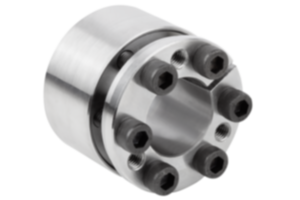
Our retaining elements: SL and KL retainers
Wide range of nuts, screws, washers, locking elements
Fastening elements for mechanical engineering & constructions
In our range you can find a wide selection of various types of fastening elements. These range from stainless steel screws and nuts to washers, locking elements and spacers.
Fastening elements are components that are used to create mechanical connections between two components and can be detached again. The requirements for the fastening material used depends on the respective application and can vary greatly.
Why should standard DIN / ISO fasteners be used?
- The universal compatibility and tolerances of the fastening elements ensure easy integration and interchangeability
- Universal standard requirements create high quality standards and safety
- Standardised production procedures ensure simplified assembly processes and greater efficiency
- Global trade advantages due to rapid interchangeability and adaptibility
- Optimised logistics and faster processes increase cost efficiency and reduce susceptibility to errors
Materials for fastening elements
The norelem range is characterised by extensive material availability, making our nuts, screws, washers and locking elements ideal for your requirements. Various materials are available for the main bodies:
- Metals: aluminium, steel, free-cutting steel, mild steel, spring steel, QT steel, malleable iron
- Stainless steel: stainless steel, stainless steel A2, stainless steel A4
- Plastics: polyamide, polyethylene, POM GF30
There are also different types of surface finish available:
- Untreated: bright, unpolished
- Coated/refined (corrosion protection): electro zinc-plated, hot-dip galvanised, blue-passivated, anodised
- Blackened and oxide finishes: bright (black), black oxidised, tempered (black), tempered and black oxidised, nitrided and black oxidised
- Heat-treated: hardened, case-hardened, tempered, hardened and ground
- Chemically treated/preservation: phosphated, phosphated and oiled, hardened, bright and oiled
- Mechanical refinement: polished
Nuts for screws: Secure DIN and ISO solutions
Nuts are widely used in almost all industry sectors to securely fixate screws and bolts. Nuts, together with the bolts, form secure connections where there is no internal thread in the workpiece.
Our nuts ensure high load-bearing capacity by absorbing high forces through even load distribution.
Different types of nuts and materials (steel, stainless steel) are used depending on requirements.
- T-nuts
- Wing nuts
- Hexagon nuts
- Extension nuts
- Turnbuckle nuts
- Cap nuts
- Slotted nuts
Various types of hexagon nuts
Hexagon nuts are one of the most frequently used fastening elements by screw connections. Hexagon nuts are characterised by their six-sided shape, which enables versatility and high load ratings. This ergonomic shape enables even force distribution when tightening, resulting in secure and uniform fastenings.
Different types of hexagon nuts are available:
- Standard: DIN 934 hexagon nuts, similar to DIN 934, DIN 982, DIN 985, DIN 6923, DIN 6630, DIN 6331
- Forms: Low form, with polyamide clamping element, with flange, with serrated flange, high collar, with spherical seat, separable with collar, with captive washer
Wing nuts
A wing nut is a special nut with two wing-like grips on the side. This enables manual tightening and loosening without the need for extra tools. This design enables quick fitting and removal of components and is therefore ideal for constructions where frequent adjustments are necessary.
The wing nuts from norelem are available made from various materials such as steel or stainless steel. There are also two different types: the German type, which is characterised by rounded wings, and the U.S. American type, which has longer and narrower wings.
Cap nuts with collar and high types
Cap nuts, also known as acorn nuts, are special nuts with a closed, dome-shaped cap that covers the exposed end of a screw or threaded pin. This protects the end from corrosion or dirt and is used to securely or attractively finish screw connections.
These three cap nuts can be found in our range
- Cap nuts similar to DIN 1587
- Compact cap nuts in Hygienic DESIGN
- Stainless steel cap nuts with collar for Hygienic USIT® seal and shim washers
The Hygienic DESIGN cap nuts in particular have a polished surface and their form is optimal for use in hygienic areas.
Screw and nut combinations - our range of suitable screws
Screws are indispensable fastening elements in mechanical engineering, construction and industry. In our range you will find a wide selection of high-quality DIN and ISO standard screws for secure, precise and durable fasteners in almost all applications
The types of screws you can find in our range:
- T-slot and profile screws
- Socket head screw
- Hexagon head bolts
- Countersunk screws
- Pan-head and half-round head screws
- Shoulder screws
- Eye bolts
- Wing screws
- Flat head screws
- Quarter-turn screws
- Hygienic DESIGN screws
Hexagon head bolts
Hex head bolts are versatile fasteners and are often used in machine, steel and plant construction. They are manufactured according to various DIN standards and create a reliable and frictional fastening.
At norelem, we have a wide range of hex head bolts so that you can find the ideal solution for every requirement:
- Hexagon head bolts with shank or thin shank
- Hexagon head bolts with collar for washers
- Hexagon head bolts with sealing washer
- Hexagon head bolts with flange with serrations
Socket head screws with hexagon socket
Cap screws with hexagon socket are characterised by their compact design and secure force transmission. They are particularly suitable for applications with limited installation space and high fitting accuracy requirements.
- Cap screws with hex socket DIN 912
- Cap screws with hex socket DIN EN ISO 4762
- Cap screws with hex socket DIN EN ISO 4762 with thread lock
- Cap screws with hex socket and low head DIN 6912
Countersunk screws with hex socket
Countersunk screws with hex socket ensure a flush, flat surface after fitting. They are used where a clean appearance or a level surface is required in addition to a secure connection.
T-slot bolts
T-slot bolts are specially designed for use in profile and rail systems. They enable flexible and the subsequent fastening of components in T-slot profiles. The T-slot bolts in our range are manufactured to meet DIN 787 or DIN 787, 12.9 standards
Shoulder screws and eye bolts
Shoulder screws are used for precise positioning of components, while eye bolts are used for pulling, lifting or securing applications. Both screw types fulfil special functional requirements in construction and assembly.
Our shoulder screws are available in various Forms (Form A and Form B), as well as shoulder screws with step and shoulder screws with a long thread.
Washers
Washers are used in screw connections to safely transfer forces onto the component, protect surfaces and support the function of the fastener. Depending on the design, they have additional tasks such as securing against loosening, compensating for angular errors, increasing the tightening force or the targeted spacing of components.
Product portfolio - washers and functional washers
The product portfolio includes a wide range of washers and functional washers for different requirements in construction, assembly and mechanical engineering:
Classic washers
Lock washers and conical spring washers
Sealing and hygiene washers
Washers for clamping and fixture technology
Levelling and adjustment washers
- Spherical washers and conical seats DIN 6319
- Spherical levelling washers
- Shim washers DIN 988
- Spacer washers (ground)
- Handwheel washers
Spring and force optimising elements
Our retaining elements: SL and KL retainers
KL and SL retainers are mechanical screw locks that prevent screw connections from loosening on their own.
KL retainers function via positive-locking elements, while SL retainers use additional locking components or clamping mechanisms to ensure that the fastener is permanently fixated.
Wide range of nuts, screws, washers, locking elements
Discover the outstanding quality and reliability of our nuts, screws, washers and locking elements today and increase the efficiency and performance of your processes.
Our products are manufactured in industrial quality and usually available immediately. They are designed for a long service life and offer you a precise and reliable solution for your applications.
Still unsure?
What are T-nuts?
T-nuts are special fastening elements for aluminium and steel profiles that rotate 90 degrees when a screw is tightened and thus lock positively in the slot. They enable quick, subsequent installations without having to dismantle the profile.
What are extension nuts?
Extension nuts are long, cylindrical sleeves with internal threads that are used to connect or extend threaded rods and screws. They are often used in the construction and installation sectors to create stable threaded connections over wide distances.
What are turnbuckle nuts?
Turnbuckle nuts are connecting elements in turnbuckles that can be used to tighten, loosen and fine-tune tensioning devices such as ropes, wires or rods.
Steel tube turnbuckle nuts, closed form (DIN 1478) have a closed tube form that protects the threads and ensures high stability and a clean appearance. The hexagonal outer shape ensures that hexagonal turnbuckle nuts (DIN 1479) can be easily adjusted with tools and are particularly easy to install.
What are slotted nuts?
Slotted nuts are special nuts with opposing slots that are tightened and loosened using a hook wrench or slotted nut spanner. They are often used in machine construction to axially secure bearings, bushes or shafts. We offer e.g. slotted nuts (DIN 1804) and slotted nuts with elastic stop
Les éléments de liaison norelem
norelem vous présente sa gamme complète d’éléments de liaison qui a été récemment élargie avec plus de 3500 nouveaux éléments et pièces DIN. Parmi ces derniers vous trouverez boulons, goujons, tasseaux, écrous, vis H et bien d’autres.
Les différentes utilisations et caractéristiques
En acier, en aluminium ou en inox, les éléments de liaison sont indispensables pour vos constructions mécaniques.
Les vis, goujons et boulons
Les vis, boulons et goujons sont trois éléments de liaisons très utilisés dans l’ingénierie mécanique. La pression exercée par ses produits se fait principalement par la tête ou bien par l’extrémité.
Les vis d’assemblage se vissent directement dans des trous taraudés et sont pour la plupart filetées sur leur longueur totale avec des têtes réduites. norelem vous propose un sélection de différentes vis pour répondre à toutes vos demandes.
- Vis à tête marteau : insérée dans la rainure du profilé, elle peut être utilisée dans des systèmes déjà existants.
- Vis à tête cylindrique à six pans creux : en acier, inox A2 ou inox A4, elle existe également avec une sécurité LONG-LOK
- Vis CHC : en tête courte DIN 6912
- Vis H Hygienic DESIGN : modèle mince pour une meilleure protection en cas de détachement accidentel ou bien vis H avec bague d’étanchéité. La gamme Hygienic DESIGN a été développée pour les environnements nécessitant une propreté et une hygiène impeccable.
- Vis à embase cylindro-tronconique : en acier ou en inox A2
- Vis FHC : DIN EN ISO 10642
- Vis d’articulation : en acier ou en inox 1.4305
- Vis rectifiée et vis rectifiée à épaulement pour la construction d’applications multiples
Les goujons sont des éléments de liaison en forme de tige filetée dont les extrémités sont filetées. Ils sont utiles pour des pièces épaisses ou pour remplacer un boulon dont la tête gênerait le montage global. norelem vous propose deux modèles de goujons, un goujon en acier et un autre goujon à filetage roulé DIN 6379.
Les boulons serrent les pièces à usiner entre leur tête et les écrous. Le boulon T DIN 787 est utilisable avec M6 à M12 et le boulon en T 12.9 est en acier de classe 12.9.
Les tasseaux et écrous
Les tasseaux en T norelem sont utilisés pour tout bridage de pièces sur des tables de machine. Ils sont facilement insérables dans les rainures en T des machines grâce à leur combinaison avec des goujons. Ils servent également pour le serrage de pièces.
- Tasseau pour rainure en T : en acier de traitement classe 10, en aluminium ou bien en inox.
- Tasseau basculant : inséré dans la rainure du profilé, il peut être ajouté ultérieurement dans un système déjà existant. La bille est montée sur ressort pour que vous puissiez fixer le tasseau là où vous le souhaitez.
- Tasseau oblique : ces tasseaux sont une alternative pour les tables de machines-outils où les boulons en T ou les tasseaux classiques ne peuvent pas être introduits.
Votre expert vous propose différents types d’écrous. Les écrous doivent toujours avoir une classe de résistance égale ou plus élevée que celle des vis. En fonction des spécificités de chaque écrou, vous aurez des serrages divers et pourrez les associer avec différentes vis. Vous trouverez parmi notre large gamme des écrous H DIN 934, des écrous avec attache en polyamide, des écrous à embase cylindro-tronconique, des écrous à bride, des écrous tendeur, des écrous à portée sphérique DIN 6330, des écrous borgne et bien d’autres.
Les rondelles et disques
Les rondelles et disques ont pour objectif de protéger la surface de la pièce qui va être serrée. Pour ce faire, la rondelle est placée entre l’écrou et la vis pour éviter un frottement entre les deux et donc supporter la pression de la vis. L’avantage est la garantie d’une bonne adhésion de la vis au système de fixation. Tous comme les vis et les écrous, norelem propose différents modèles de rondelles et disques pour répondre à tous vos serrages mécaniques :
- Rondelles plates
- Rondelle ressort DIN 6796
- Rondelles de grand diamètre extérieur
- Rondelle en plastique imperdable
- Rondelle autobloquante
- Rondelle amovible
- Rondelle pivotante
- Disque verrou avec vis d’assemblage
- Rondelles de sécurité DIN 5406
Les bagues d’arrêt
Les bagues d’arrêt ont pour principal objectif de maintenir vos pièces et garantir un ajustement parfait. Elles sont utilisables dans de nombreux cas de figure en tant qu’élément de guidage, entretoises, et bien sûr pour fixer des pièces d’usinage. Les bagues d’arrêt sont souvent utilisées pour des constructions avec des chocs ou bien sur des pièces qui ont besoin d’un réglage récurant. norelem vous propose :
- Bague d’arrêt en acier DIN 705
- Bague d’arrêt fendue pour entourer l’arbre et répartir de manière homogène les forces de retenue.
- Bague d’arrêt avec manette indexable
- Bague d’arrêt large
- Bague d’arrêt pour arbre avec plat
Découvrez dès maintenant et commandez en ligne les éléments de liaison norelem!
norelem est votre partenaire fiable pour vos composants standard destinés à la construction et à l’ingénierie mécanique.