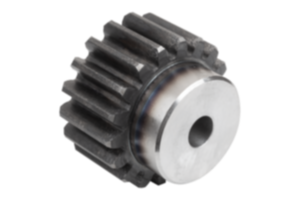
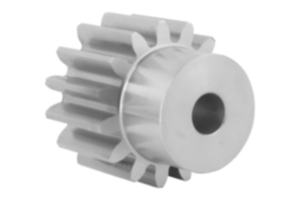
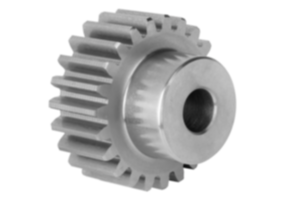
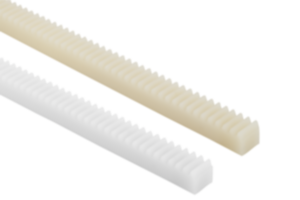
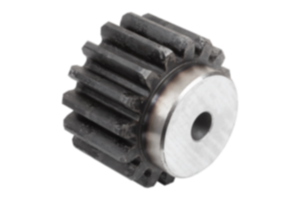
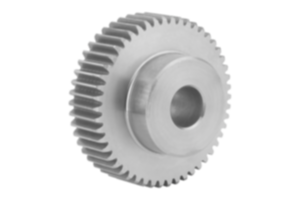
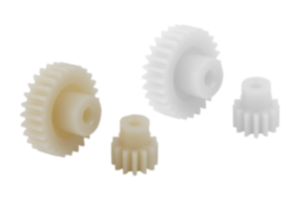
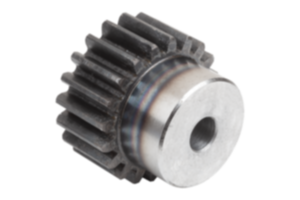
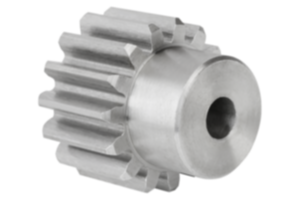
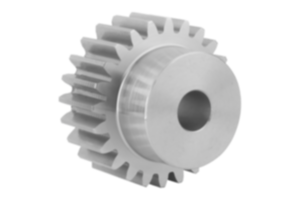
Spur gear straight polyketone 22402-2100064
- Dureté élevée
- Faible coefficient de frottement
- Durée de vie importante
- Protection efficace contre la rupture des dents
Sales unit
€7.05
plus sales tax
Registered customers are offered live availability of the item after logging in to the website. Please log in or register to see the live availability or request a quotation.
Added to your shopping cart
Designation
Spur gear
Version 1
straight
Version 2
with hub
Main
material
polyketone
B=Width
9
D1=Pitch circle diameter
64
D2=Fastening hole
10
N=No. of teeth
64
B1
4,6
D
66
D3
21
D4
56,5
L
18
Max.
torque
Ncm
95
Module
1
~ CONFLICT MINERALS 3TG status
no intentional 3TG
~ CP65 substance 2 cancer
soots, tars, and mineral oils
~ PFAS free?
not yet identified
~ REACH SVHC-free?
yes
~ RoHS conformity
yes, without exemption
~ TSCA 6(H) conformity
yes
Description
Matière
Polyacétal (POM) ou polycétone (PK).
Finition
Traité par pulvérisation, denture droite. Angle de pression 20°. Alésage usiné.
Polyacétal blanc.
Polycétone ivoire.
Polyacétal blanc.
Polycétone ivoire.
Nota
Polyacétal : matériau standard avec une dureté élevée et un coefficient de frottement réduit.
Polycétone : matériau avec une durée de vie sensiblement plus longue, une transmission de puissance plus élevée et une meilleure sécurité contre la rupture des dents grâce à sa résistance à l'usure extrêmement grande et ses très bonnes propriétés tribologiques.
Utilisable sous l'eau et sous d'autres fluides.
Les roues dentées traitées par pulvérisation peuvent posséder des retassures internes dûes à la fabrication. Celles-ci peuvent devenir visibles lors du perçage ou en présence de rainures. Leur fonctionnement ne s'en trouve pas affecté.
Plage de température
-40 °C to +140 °C (taking amount and duration of load into account).
Attention
The torques specified in the tables relate exclusively to the toothing. The shaft diameter, key size, etc. are not taken into account. The permissible load calculations are based on the basic principles of the pitting load capacity of the tooth flanks as well as the occurring tooth root stress. The respective permissible load of a gear wheel depends on so many different factors that the values specified can only be reference values meant to make selection easier. The torque specifications relate to a single tooth. The overlap, which is essential for determining the transmissible torque, occurs depending on the pitch diameter, gear wheel pairing, etc. In the simplest straight tooth cases, an overlap ratio of 1.1 to 1.25 is normal. To increase the overlap, a higher number of teeth with smaller modules is used. A good profile overlap can minimise damage such as pitting.
Important note on downloading CAD models
In order to download our CAD models, you must log in first. If you have not created an account yet, please register under "My Account" (right side of the screen) and follow the instructions.
Other customers also bought